It started with ten minutes. Roberta would leave her SUV in my driveway while visiting someone across the road. Soon, ten minutes became hours, then overnight stays. I asked politely, but nothing changed. Eventually, I put up a PRIVATE DRIVEWAY — NO PARKING sign. She simply parked beside it and told me I was making too much of a fuss. Then, one morning, her SUV blocked me in on the day of a long-awaited doctor’s appointment. That was the moment I decided I would stop asking.
The following Monday, she parked there again. This time, I made coffee and waited. By noon, thirty cars had filled my driveway and the gravel lane behind my property. Roberta stormed outside in her robe, demanding that I move them. I calmly told her I couldn’t. Then the last man to leave stopped when he saw her. His name was Harold Beckwith, a seventy-eight-year-old surveyor. He looked at Roberta and quietly said her name. Her expression immediately changed.
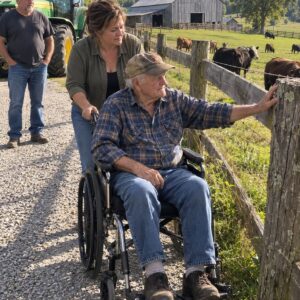
Harold had mapped the gravel lane in 1974 and explained that it was a registered right-of-way leading to the old orchard. The thirty visitors were volunteers attending an annual survey walk held there for eleven years. My late husband had spent four years restoring the orchard, and the event honored his work. But Harold carried another surprise. He was Roberta’s former father-in-law—the father of the husband she had abandoned in 1998 without explanation. For decades, Roberta had built a new life far away from the people she had left behind.
Roberta moved away that spring. I never forced her to leave; she simply found herself facing a past she had worked hard to escape. Last October, the orchard opened to the public, and a bench bearing my husband’s name was placed at the top of the lane. Harold still sits there most Sundays. Roberta had spent months looking at my driveway and seeing nothing but empty space. She made the same mistake with me. Sometimes, what looks empty is simply holding something you haven’t taken the time to understand.