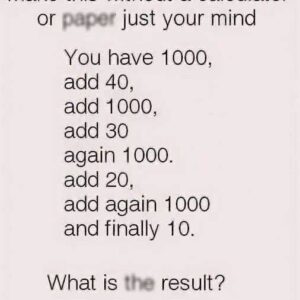
The secret to getting better at solving math problems is to make careful reading a habit. Before calculating anything, examine the entire expression and identify which operations must be performed first. In standard arithmetic, parentheses take priority, followed by exponents, multiplication and division from left to right, and finally addition and subtraction from left to right. Multiplication does not automatically come before division, nor does addition always come after subtraction simply because of how the symbols appear on a page. When operations share the same level of priority, their position in the expression determines the order in which they are evaluated. This is why a problem that appears obvious can produce so many different answers online. People often remember part of a rule but overlook the details that make it work. The solution is simple: pause, read carefully, and work through each stage in the correct order. If necessary, write the intermediate steps down instead of trying to perform everything mentally. This approach may feel slower at first, but it builds confidence and reduces careless mistakes. The same principle applies in the kitchen. Allow the beef to brown in batches, give the onions enough time to soften, and let the stew simmer until the meat becomes tender. Each stage contributes something essential, and skipping one can change the final result. Whether you are working with numbers or preparing dinner for your family, a little patience can make the difference between something merely finished and something done well.
Perhaps that is why such simple challenges continue to attract so much attention. They offer more than an opportunity to demonstrate mathematical knowledge. They remind us how easily confidence can become carelessness when we believe a task is beneath our attention. We sometimes rush through conversations, overlook instructions, make assumptions about other people, or choose the quickest solution without considering whether it is the right one. Then we wonder why the outcome falls short of our expectations. The answer is often found in the small details we failed to notice along the way. A good mathematician respects the rules of calculation. A good cook respects the ingredients and the process. And a thoughtful person understands that speed is useful only when it does not come at the expense of accuracy. So the next time a seemingly effortless math puzzle appears on your screen, resist the urge to guess. Read it twice, apply the rules carefully, and trust the process rather than your first impression. You might discover that the greatest lesson was never about numbers at all. It was about learning to slow down long enough to get things right.