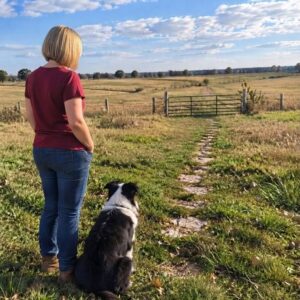
At the foot of an old stump, I discovered a square of sod that had been cut and carefully replaced. Beneath it sat a battered metal cash box wrapped in a feed sack. Inside were envelopes filled with money and a letter addressed to me in Tom’s familiar handwriting. My hands trembled as I unfolded it. He explained that years earlier, during a terrible drought, he’d sold an old tractor for twenty-two thousand dollars and hidden the money because he was frightened about our future. As the years passed and our finances improved, he’d quietly added to the savings. He had never found the courage to tell me about the secret. The total came to just over forty-one thousand dollars, enough to pay off the remaining loan on our north eighty acres, with money left over. But the letter wasn’t really about the money. Tom apologized for all the things he’d never learned to say aloud. He told me to let Ben pursue ranching only if it was truly what he wanted, and to give him the chance to experience life beyond our fields. Then he wrote about his brother, Dwayne, the very man who had stolen our hay. Tom knew Dwayne had spent his life feeling overlooked and resentful, believing their father had favored his older brother. “Don’t let him take the place,” Tom wrote. “But don’t let him fall, either. He’s the only brother I’ve got. If you can find it in you, give him a way back.” I sat in the grass and cried harder than I had since Tom’s diagnosis. Even in death, my husband was asking me to do something difficult: protect what we’d built without allowing anger to destroy what remained of our family. I paid off the ranch loan and secured the remaining money for Ben and me. Then I visited my elderly mother-in-law, who admitted that Dwayne had always been frightened of losing what little connection he had to the family. She didn’t excuse what he’d done. She simply asked me not to close the door forever. Two weeks later, I drove to Dwayne’s house with an envelope containing the final part of Tom’s letter. I told him I could have called the sheriff, and that I still wasn’t ready to forgive him. But I was willing to offer him a chance to make things right. He would help Ben with the ranch work every Saturday, apologize to the neighbors he’d deceived, and face the harm he’d caused. Dwayne wept as he read his brother’s words. “He knew,” he whispered. “He knew all those years, and I thought he looked down on me.” I answered simply, “He thought you were his brother.”
That following Saturday, Dwayne arrived before sunrise wearing new coveralls and carrying a thermos. He apologized to Ben, then spent six hours working beside him in the cold. Their relationship didn’t heal overnight. At first, they barely spoke. But week after week, something began to change. They learned to work together, sharing the quiet routines Tom had once handled himself. Eventually, I heard them laughing in the barn, and one afternoon Ben showed his uncle how to cut the twine from a bale exactly the way his father had taught him. By winter, the ranch was secure, the cattle had enough hay, and Dwayne had become a regular presence on Saturdays. The following summer, our neighbors returned to help with the next cutting. We gathered beneath the old cottonwoods for lunch while the hay dried in the sunshine. Dwayne stood up, turning his hat nervously in his hands, and admitted that he’d spent fifty years feeling like an outsider. He confessed that he’d taken his resentment out on the people who had always been willing to include him. Then he thanked me for giving him a chance to return. My son stood, crossed the grass, and held out his hand. Dwayne took it, and moments later, the two of them embraced. I sat quietly, watching the green fields stretch toward the horizon, and took Tom’s notebook from my pocket. Beneath his final words, I wrote my own: “Enough for everyone, and then some.” For years, I’d believed a ranch survived through hard work, careful planning, and the strength to endure difficult seasons. Tom had taught me something more important. Sometimes, survival means knowing when to fight, when to forgive, and when to give someone the opportunity to become better than their worst mistake. The hay had come home. The ranch was ours. And somehow, in the middle of our greatest loss, my husband had left us something more valuable than money: a way forward.