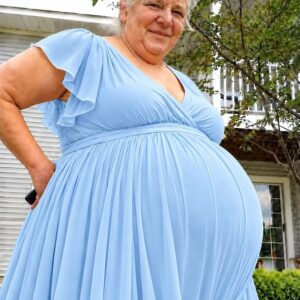
The following morning, Daniel returned with a box of documents from the hidden safe. Inside were research reports, correspondence, photographs, and records connected to Carter Biomedical. One photograph showed Robert standing outside a modern laboratory beside Dr. Evelyn Carter. On the back, he had written, “Project Margaret — Phase One.” I could hardly believe what I was seeing. My husband had worked in insurance, and although he occasionally discussed investments, I had never known him to finance medical research. Then Daniel found a document containing my name and a reference to family medical information. I didn’t remember agreeing to participate in any research, and I couldn’t understand why Robert had never discussed it with me. Dr. Parker explained that the old records did not establish any connection between the research project and my current medical condition. My swollen abdomen still required proper treatment, and the doctors would investigate it separately. However, the documents raised important questions about how my personal information had been collected and whether I had ever given informed permission for its use. Among the papers, we discovered a letter from Dr. Carter urging Robert to make sure I understood the project and had an opportunity to decide whether I wanted any involvement. Robert had apparently promised to speak with me, but there was no evidence that he ever did. I finally opened the envelope he had left behind. In his familiar handwriting, he admitted that he had helped finance a research program and had allowed family medical information to become part of its records. He confessed that he had avoided explaining everything because he feared upsetting me. Reading those words hurt more than I expected. After fifty years of marriage, I had believed that my husband trusted me enough to share his greatest concerns. Instead, he had made decisions involving my privacy without giving me the chance to understand them.
When Dr. Carter eventually visited me at the hospital, she confirmed that the project had studied long-term health conditions and hereditary medical information. She acknowledged that the surviving records did not clearly establish whether I had personally authorized every aspect of the research. She also admitted that communication with participants had been incomplete after Robert’s death. I was devastated, but I wanted answers rather than assumptions. I requested the remaining records and arranged for an independent review while my doctors continued investigating the abdominal mass. After discussing the medical risks and options with my treatment team, I agreed to surgery, and the procedure was successful. As I recovered, I began to understand that two separate things had happened: I had developed a medical condition that needed attention, and I had discovered a painful secret about my marriage. There was no evidence that the old research had caused my illness, but I still deserved to know how my information had been used. One afternoon, Daniel sat beside my bed and asked whether I regretted discovering the truth. I thought about Robert’s photograph, the sealed letter, and the years of memories we had shared. “No,” I told him. “I wish your father had trusted me enough to tell me himself, but I don’t regret asking questions.” Months later, after returning home, I placed his letters and photographs in an album. I no longer needed to pretend our marriage had been perfect to appreciate the love we had shared. At eighty, I had learned that even a long and happy life could contain unanswered questions. But I had also learned that it was never too late to speak up, protect your privacy, and make your own decisions. My husband’s secret had changed how I remembered our past, but it would not decide how I lived the years ahead.